 Nishant Ahlawat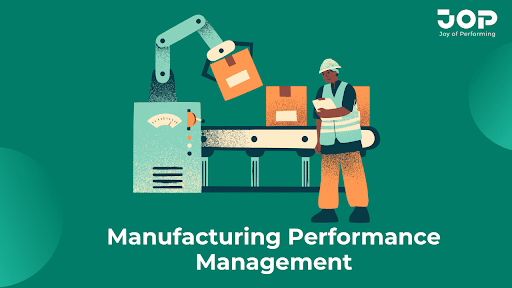
OKR Meaning Explained: What Is an OKR? Definition, Types & Examples
Most teams are not short of work; they are short of clarity. I have […]
In manufacturing, every minute counts and so does every machine, process, and person on the floor.
Still, being productive in a faster world requires more than just the ability to work efficiently. It requires a focus on business goals, eliminating waste, and a commitment to quality. That’s where Manufacturing Performance Management (MPM) enters the picture.
Whether you are dealing with a single plant or more than one, you will find that management of performance enables you to get information on both the areas that are working properly and those that are not.
For this blog, I will break down what manufacturing performance management is, why it’s more important than ever, and how you can start building a system for it in this post.
Manufacturing Performance Management is a comprehensive way to monitor, measure, and control the efficiency of manufacturing processes. This includes focused attention to important key performance indicators such as machine availability, production efficiency, or defect rates while synchronizing manufacturing plans with business strategies.
MPM is more than a spreadsheet or a reporting function where data is manually fed into a system. It all comes together to ensure that factories are not only running but are doing so with purpose and profitability in mind.
Today, the manufacturing environment is tougher than ever before. With the increase in consumer demand, global supply chain management complexities, plus further cost-cutting measures, the need for better control in their operation is a must for the manufacturers.
It is at this point that performance management delivers real value.
MPM enables the agility of the manufacturing world through its ability to offer the insights required to make decisions faster and better. It also helps avoid downtime, reduce and eliminate wastes, and improve the quality of the products. But beyond that, it helps build a culture of accountability and improvement, because the teams are no longer working hard; they are working better.
When performance is measurable, you establish trust, promote consistency, and provide a firm foundation for scalable business.
An effective performance management process addresses a number of key aspects. Let’s go through the pillars that make it efficient:
The key starting point for performance management is understanding what’s happening on the shop floor in real-time. Machine operation, production cycles, down times, and shift performances can be tracked to identify irregularities before expensive interruptions occur.
Contemporary solutions for MPM are fully integrated with existing systems, such as an MES system or an ERP platform, providing real-time visibility into operations, which facilitates fast reaction times when there is a decrease in output and quality problems emerge.
All metrics do not have an equal status. The MPM emphasizes the KPI that matters most, such as Overall Equipment Effectiveness (OEE), cycle times, scrap rates, or on-time deliveries.
It is not about being able to measure anything and everything. It is more about tracking the metrics that will directly relate to efficiency, costs, and the satisfaction of the clients.
Product quality directly influences customer trust and operational cost. MPM includes systems that monitor product defects, deviations, and returns to investigate the root cause.
By embedding quality tracking into the performance process, teams can take corrective action much quicker, thereby reducing the likelihood of recurrence. It’s about catching problems early, not just correcting them later.
People are as crucial as machines. A sound MPM framework encompasses regular check-ins with team leads, performance goals for operators, and systems recognizing contributions while pinpointing areas for training.
Transparency of performance data and sharing of that data enables teams to own their results and creates a much more engaged and accountable culture in the process.
Manufacturing performance management is not all about tracking; rather, it’s about improvement. Teams can make the journey from reactive firefighting to proactive problem-solving by analyzing time-of-trend analysis, finding patterns, and driving improvement projects (such as Kaizen or Six Sigma initiatives).
This sparks momentum. Over time, relatively minor performance gains compound into dramatic improvements in productivity, cost and quality.
Increase efficiency by streamlining processes, minimizing downtime, and producing more with less.
Quality issues should be detected early, and efforts should be made to minimize disparities in the quality
Leverage real-time information and trending data in order to act faster and with more confidence.
They provide the necessary clarity regarding expectations for teams, resulting in accountability and motivation.
Create the foundation for growth using standardized and reusable performance processes throughout the plants.
Define what performance means in terms of your operation, whether that is reducing downtime, improving productivity, or fulfilling deliveries.
The KPIs you pick should represent the goals of your business, and they should be measurable, visible, and understood.
Utilize software that will interface with your equipment and/or your ERP system in order to give you real-time visibility into your data.
Communicate the tracking of performance and how team leads and operatives can impact the results.
Encourage a rhythm of weekly or monthly reviews to reflect on results, identify root causes, and launch improvement efforts by teams.
Toyota has been widely known for its manufacturing excellence, and much of that success comes because of the performance management principle. Guided by systems such as the TPS, it digs down into performances at every level-from machine efficiency to operator output.
Events such as Kaizen-which can be translated to continuous improvement-daily huddles, and the tracking of performance visually have all combined to enable Toyota to reduce waste and improve quality while scaling globally without sacrificing standards.
It is actually one of the best examples of how a fine performance system motivates success.
It’s not about micromanaging people or machines; manufacturing performance management builds a system that simply helps people do their best work every day.
When you give your teams clarity, visibility, and ownership over performance, you unlock improvements that go far beyond the production line. You build a culture of excellence in dispersed operations-one that drives efficiency, reduces waste, and delivers value to your customers.
If you wish to grow your manufacturing operations in a sustainable manner, performance management is not optional; it’s a must-have.


It’s the process of tracking and improving production, quality, and workforce performance across manufacturing operations.

