 Nishant Ahlawat
OKR Meaning Explained: What Is an OKR? Definition, Types & Examples
Most teams are not short of work; they are short of clarity. I have […]
Everyone has worked harder to attain a goal they cared about. This may range from earning a bonus, earning recognition, being promoted, or gaining security of employment. The potential for gain is an effective motivator in any working environment.
This is why the concept of incentive theory is relevant. It deals with the use of both rewards and consequences to motivate behavior.
The employee is most likely to behave in a certain way when there is a relationship between his/her behavior and a reward.
The relevance of this is due to motivational issues in the workplace. According to the 2026 State of the Global Workplace Report by Gallup, 20% of workers globally were engaged in 2025.
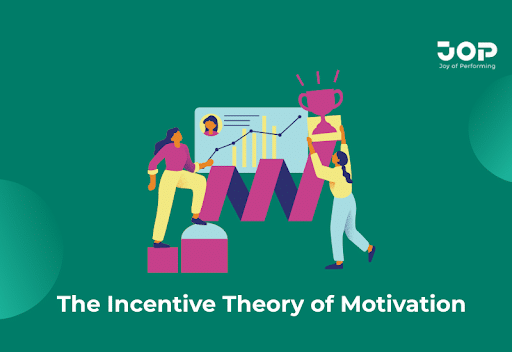
The motivation incentive theory proposes that motivation stems from people having something to gain or avoiding some negative result or experience.
At the workplace, this means working hard to earn a bonus, performing tasks promptly for the sake of praise, or enhancing skills to advance to another, higher position.
The theory suggests that human behavior is contingent upon its consequences; positive results serve as an incentive to continue with certain actions, whereas negative results lead people to refrain from undesirable behavior.
Still, there is much more to the concept of theory than “reward and performance.” Not all people are equally incentivized with money; instead, some of the possible incentives include commission, praise, job stability, advancement, etc. Incentives will be most effective if they are fair, clear, and valuable for employees.
Workplace incentives are either positive or negative. Some incentives encourage workers to be more productive and efficient, while others discourage certain types of behavior that negatively impact production, discipline, and results. In general, an ideal workplace should include incentives such as rewards, recognition, opportunities for growth, security, and accountability.
One of the direct forms of incentives in the workplace is compensation. It involves salaries, bonuses, sales commissions, profit sharing, and performance incentives. Employees need to see the link between their efforts and the financial rewards in order to remain motivated.
Another great incentive for the employees is recognition. Everyone wants his or her efforts to be recognized. Recognition can take different forms: from a compliment, praise, or a badge. It will be more effective if it comes in time, is targeted, and is based on the employee’s contribution.
Employees get motivated by job security since they receive stability and hope regarding the future. This way, they will not have any concerns regarding their positions, which means they can concentrate on working rather than wondering. Job security also makes them owners and fosters trust towards the company.
Promotion can be considered an incentive as it links performance with career development. Employees work harder when they realize that they can improve their status, gain responsibilities, and visibility. Nevertheless, promotions must be done according to specific criteria, which should depend on the performance of workers.
Disciplinary actions and demotion are types of negative incentives designed to stop inappropriate behavior at work and ensure it will not happen again. However, it should be mentioned that disciplinary actions are best used when combined with feedback, support, and proper documentation.
Termination is one of the strongest negative incentives because it shows workers the limits and consequences of poor behavior. In some cases, workers can be dismissed from their jobs because of repeated underperformance and misconduct at work.
The use of this in the work environment can be summarized by making sure that the employees clearly understand what is expected of them, how they are going to be evaluated, and the results that they can achieve.
First, you need to define the desired behavior, which may include increased sales, improved customer service, faster project execution, or enhanced collaboration, among others. The incentives used must have a connection to the business outcomes.
Secondly, you need to make it possible for employees to monitor their own performance against the objectives, targets, run rates, and the criteria for incentives.
Lastly, selecting an appropriate reward for a particular group of workers is vital since what may work for salespeople may not be effective for management staff.
Understanding incentive theory examples is much easier when one considers everyday occurrences in the workplace.
The presented incentive theory examples clearly demonstrate that incentives are not necessarily monetary. Other types include recognition, career development, visibility, safety, and accountability.
This is beneficial; however, there are some issues that come along with it. Motivation will turn out to be too transactional because people will do work only when rewarded with something.
Moreover, it might lead to myopic behavior since employees tend to think about meeting their targets without considering their customers’ needs and the overall impact.
Finally, the fairness of incentives is crucial since people will be demotivated if incentives seem unfair or inconsistent.
Companies must make sure that the incentives they provide promote the right kind of behaviors and that they not only consider outcomes but also behaviors that led to certain outcomes.
This is the reason why this is efficient when there is transparency, consistency, and fairness in incentives provided.
This theory proves that people respond when there is a defined outcome associated with their actions.
In organizational settings, such outcomes include bonuses, appreciation, promotions, job security, and accountability. However, the outcomes have to be fair and observable for incentives to function well.
When dealing with huge teams in sales, the need for transparency and tracking becomes even greater. With the help of JOP Edge, it becomes possible for managers to monitor sales results, incentive achievement, run rate discrepancies, and team accountability.
It becomes easier to manage performance when there is clarity on how efforts relate to rewards.


Incentives matter because they give employees a clear reason to put in effort, improve performance, and stay committed to their goals. When designed well, they help connect everyday actions with meaningful outcomes.
