Your Guide to Finding the Best HR Performance Management Software
 Nishant Ahlawat

On this page
Best HR Performance Management Software
HR performance management software simplifies how companies track, assess, and improve employee performance. It supports goal setting, performance reviews, feedback collection, and development planning, all while helping align each employee’s efforts with the company’s bigger goals. Key features typically include goal-setting tools, review workflows, feedback systems, and support for growth and development.
What Is HR Performance Management Software?
At its core, HR performance management software is designed to help companies support, track, and improve how their people perform at work. It’s the engine behind effective feedback, goal-setting, performance reviews, and employee growth.
Think: goal-setting, feedback, check-ins, reviews without the messy spreadsheets or awkward once-a-year convos. The good ones make it easy to keep things on track without it feeling like a boring corporate ritual.
Bottom line? It helps your people do great work and feel good about it. Win-win.
The Value It Brings to Your People and Business
Improved Employee Performance
When goals are clear and feedback is consistent, employees have a better sense of what’s expected and can focus on growing and improving in the right direction.
Higher Engagement
Ongoing feedback and personalized development plans help keep employees motivated, involved, and connected to their work.
Stronger Alignment
It ensures everyone’s efforts support the company’s bigger picture, leading to better teamwork and stronger business results.
Smarter, Data-Driven Decisions
With clear performance data, companies can make more informed choices around promotions, compensation, and talent development.
Must-Have Features for Smarter Performance Management
Goal Setting
Helps set clear, measurable goals for individuals and teams, keeping them aligned with the company’s overall objectives.
Performance Reviews
Makes performance reviews more structured and efficient, using data to guide meaningful conversations.
Feedback Collection
Encourages ongoing feedback from managers, peers, and even customers — helping build a culture focused on growth and improvement.
Development Planning
Supports employee development by offering tools and resources for training, upskilling, and long-term career planning.
Data Analysis
Provides insights through analytics and reporting, helping track progress, spot patterns, and make smarter decisions.
Why HR Performance Management Softwares Are Important?
Performance management is often seen as tedious, bureaucratic, or worse, pointless. But with the right software, it becomes a strategic powerhouse. It helps teams stay aligned with business goals, surfaces roadblocks early, and keeps everyone in sync with real-time feedback and clear expectations.
HR performance software doesn’t just benefit HR it supports managers in leading more effectively and helps employees grow in ways that actually matter. That’s the real magic: it turns performance into something continuous, collaborative, and genuinely useful. Not a once-a-year paperwork fest.
List of Top HR Performance Management Tools
Below are 10 leading HR performance management systems to consider in 2025.
| Software | Best For | Pricing Details | Key Features |
|---|---|---|---|
| JOP (Joy of Performing) | Clear and aligned OKR Management with emphasis on teamwork and engagement |
|
|
| Workday | Large enterprises needing scalable HCM and performance management | Base fees: $50–$150/user/month |
|
| BambooHR | SMBs seeking user-friendly HR solutions | $6–$7/user/month |
|
| Paycom | Midsize to large organizations needing comprehensive HR solutions | $24–$36 per employee/month |
|
| Gusto | Small businesses seeking integrated payroll + performance tools | Base fee: $40/month |
|
| Zoho People | SMBs needing customizable, affordable HR software | Essential HR plan: $1.25/user/month |
|
| SAP SuccessFactors | Enterprises requiring full talent management solutions | Employee Central: $6.30/user/month Payroll: ~$8.15/user/month |
|
| UKG | Organizations needing collaborative, year-round performance management | ~$30/user/month |
|
| ADP | Businesses of all sizes needing scalable HR + performance tools | Starts: $79/month + $4/user |
|
| Oracle HCM | Large enterprises needing complete HCM platforms | $13–$15/user/month |
|
I’ve rounded up the best options—features, pros, cons, and all the juicy details. Let’s find the right HR performance management software for you!
1. JOP (Joy of Performing)
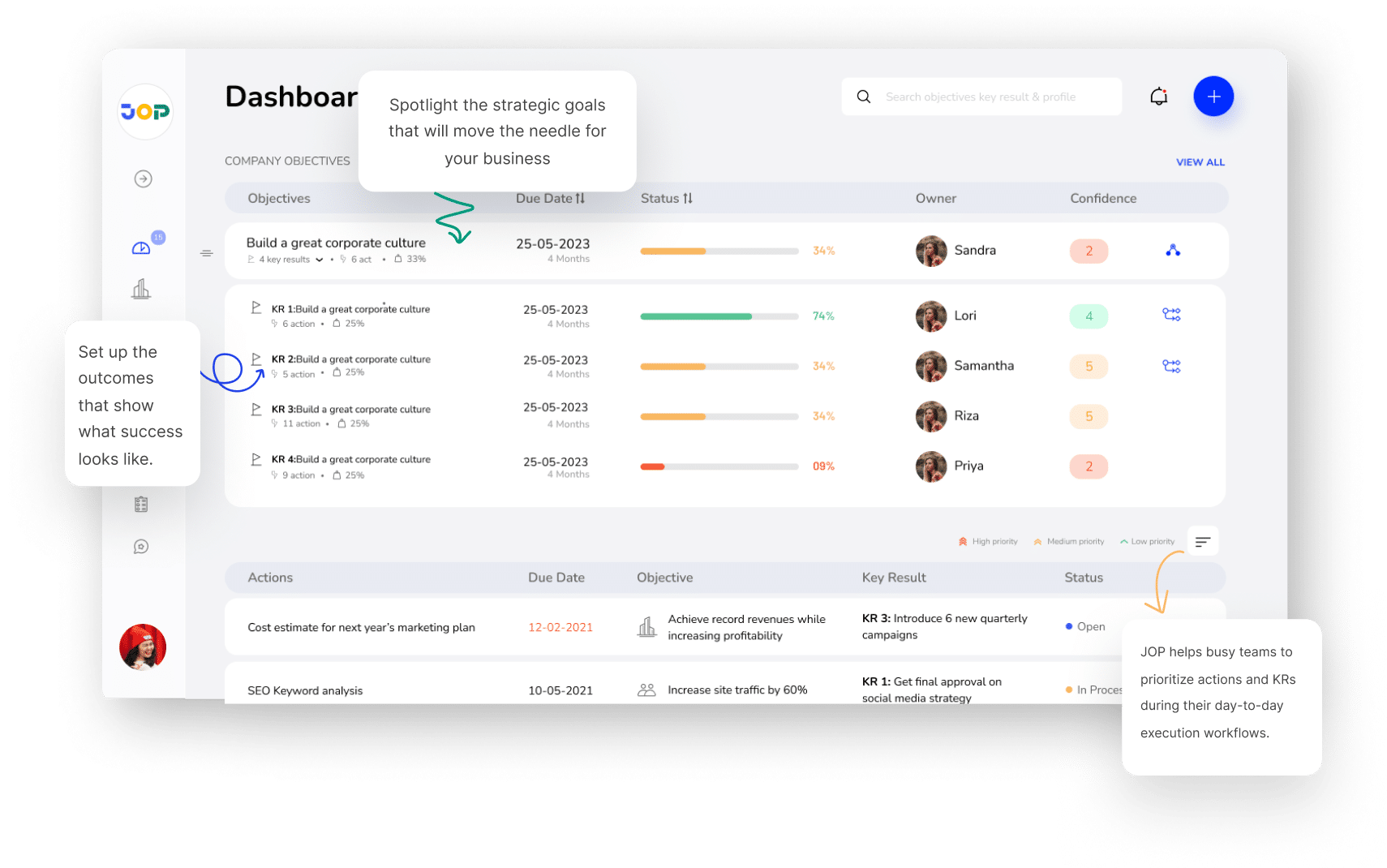
Let’s start with my top pick JOP. This one’s not just another HR tool. It’s built to create a high-performing, happy workplace. JOP puts people first with features like personalized performance plans, gamified recognition, and super intuitive OKR visualizations. It’s a breath of fresh air for teams who want to go beyond the basics.
It’s not just about tracking goals JOP is about helping your people grow. Whether it’s motivating your team with recognition or visualizing progress through its constellation-style OKRs, this platform knows how to bring performance and engagement together.
What I love
Personalized performance plans for individual employees
Gamified recognition system to enhance employee engagement
Seamless integration with existing HR systems
OKR data visualization in a constellation format for easy tracking of progress
Pros
- Each employee gets a tailored performance plan.
- Gamified recognition really helps boost morale.
- Integrates easily with existing HR tools.
- The OKR constellation view makes tracking goals fun and easy.
Cons
- Might need some training for folks new to OKRs.
JOP Pricing
2. Workday
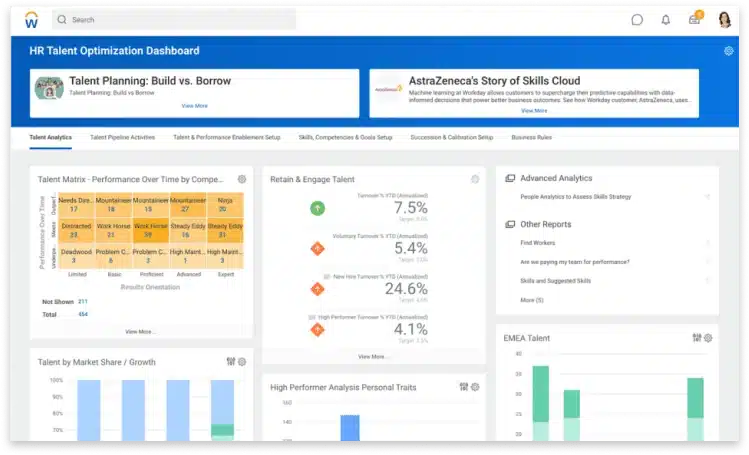
Workday is a heavy-hitter with tons of HR features packed into one platform. It’s great for teams that need deep functionality and strong data reporting, but it might feel like overkill for smaller businesses.
Key features:
Continuous feedback, scheduled evaluations, and development planning.
Pre-built and customizable dashboards with insights into headcount, turnover, diversity, and more.
Clock-in/out features, schedule tracking, and time-off requests are all integrated into the app itself.
Allows you to track leave balances, policies, and eligibility with automation and compliance support.
Pros
- It includes a full range of HR tools in one platform.
- Financial systems integrate well with it.
- It’s designed to support global teams.
Cons
- Support responses can vary in quality.
- The platform can feel overly complex.
- It lacks a free trial for hands-on testing.
3. BambooHR

BambooHR is known for its simplicity and ease of use. If you’re a small or mid-sized team looking for a clean experience and solid core features, this one’s worth a look.
Key features:
Centralized digital employee records with easy access and editing.
Request, approve, and track paid time off (PTO), sick days, and holidays.
Ensure data integrity and meet legal standards (e.g., EEO, ACA reporting).
Pros
- The interface is clean and intuitive.
- Self-service tools are helpful for employees.
Cons
- Analytics and reporting are quite basic.
- Limited options for integration and customization.